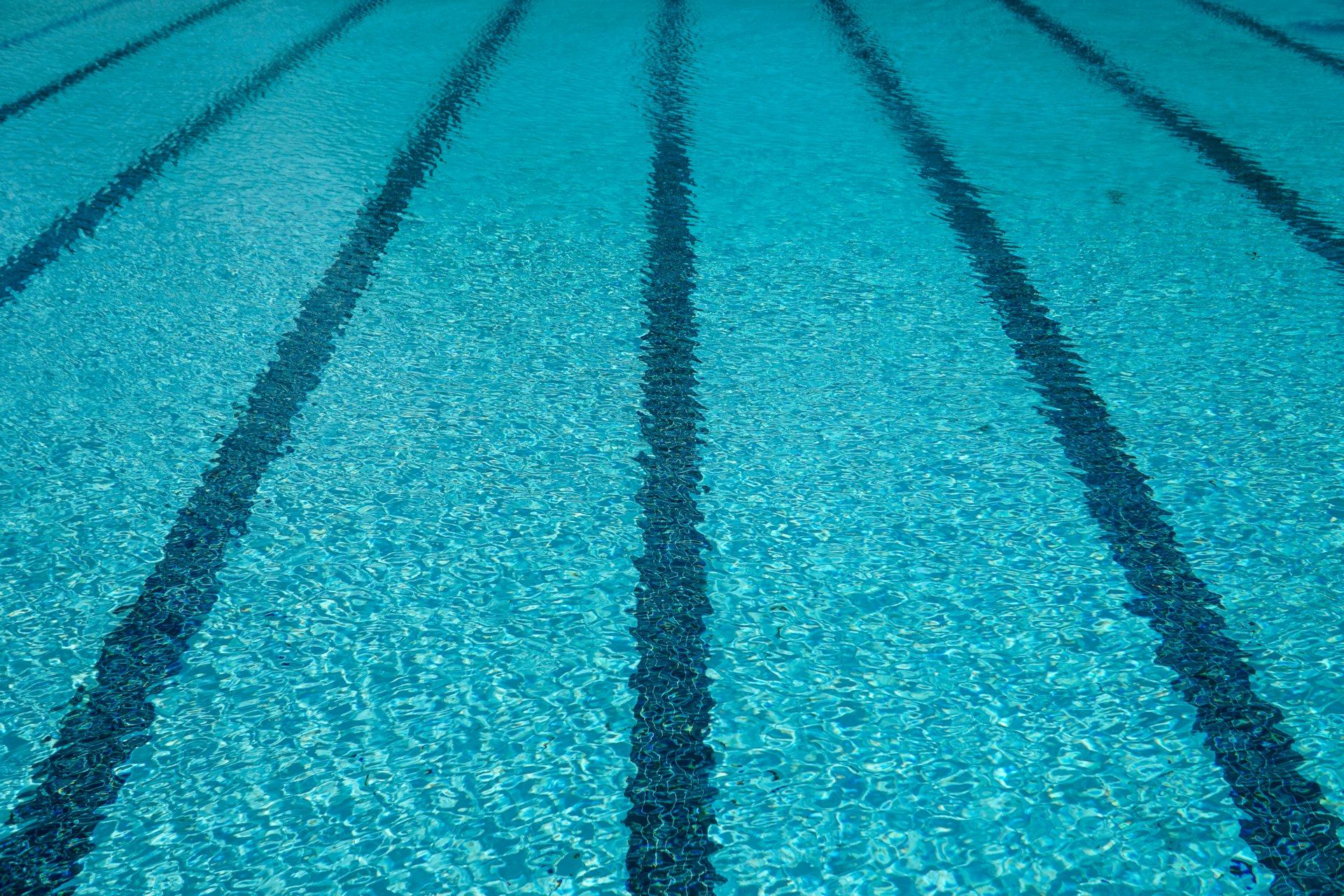

The fill test at the Collegiate Aquatics Center ended the way a fill test should: with nothing to report. The 50-meter competition pool and the diving well were filled, held and watched for days, and the water level did not move. With the natatorium roof closed in and the pool shells proven, the job now turns from a concrete job into an air, water and technology job. The first championship meet is already on the calendar. The schedule has been built backwards from that date since the day we mobilized.
A pool is a concrete structure with no margin
A competition pool has to be watertight, level to tight tolerances and exactly the right length, because a meet result only counts if the lanes measure true. Our self-perform concrete crews placed the pool shells and the diving well in planned pours, with waterstops at every joint and the embedded gutters, inlets and anchors set and surveyed before each placement.
The fill test is the moment that work gets graded. Each basin is filled, the level is recorded on a set schedule and the outside of the shell is walked for damp spots. Fixing a leak now costs days. Finding one after the tile is on costs months. That is why the test sits on the critical path, not beside it.
The swimmers will never see the concrete. They will only know the lanes are true and the water is still. That starts with a shell that holds.
Superintendent, Tum Harry
Air and water become the critical path
A natatorium is a hard building to keep healthy. Warm, humid, chlorinated air attacks steel, ductwork and electronics, and condensation on a cold surface turns into corrosion over a few winters. With the roof on, mechanical, electrical and technology crews are working through the building at once, and that only works with a clear plan.
- Dehumidification first. The air handling units that control humidity and keep the deck air moving are set and started before finishes go in, so the building is dry while it is being finished.
- Water treatment on the schedule. Filtration, chemical feed and heating for both basins are scheduled as core work and commissioned with the owner's operators.
- Technology as structure. Timing systems, the scoreboard, the sound system, the network and the cameras are coordinated in the model and pulled through the same pathways our crews built, then tested by the team that installed them.
- Controlled laydown. Deliveries arrive by appointment through one gate, so every trade can work the site without trucks stacking up.
What comes next
The coming months bring the tile, the starting blocks, the diving boards and the 1,800 seats. Commissioning will run in stages so the owner's operations team can train on each system as it is turned over, then run a full practice meet before the first race counts. Our thanks go to every crew and trade partner who has worked the pool and the roof to get here.